
About
Maurice Tabard (1897, Lyon – 1984, Nice) was a French photographer and one of the leading figures associated with Surrealist photography, a movement he entered under the influence of his friend Man Ray. Born to a silk industrialist father and a musician mother, he began his working life as a pattern designer for silk textiles before moving with his father to New York in 1914, where he studied at the New York Institute of Photography and continued his training through 1920 with the photographer Emile Brunel.
Following his father's death in 1922, Tabard worked as a professional portrait photographer for the Bachrach Studio in Baltimore, photographing prominent clients including the family of future U.S. President Calvin Coolidge. In 1928 he returned to Paris and turned to fashion photography, where he met the Surrealist writer Philippe Soupault, who introduced him to influential magazine editors including Lucien Vogel and Alexey Brodovitch. He went on to contribute to Bifur, Vu, Harper's Bazaar, and Le Jardin des Modes.
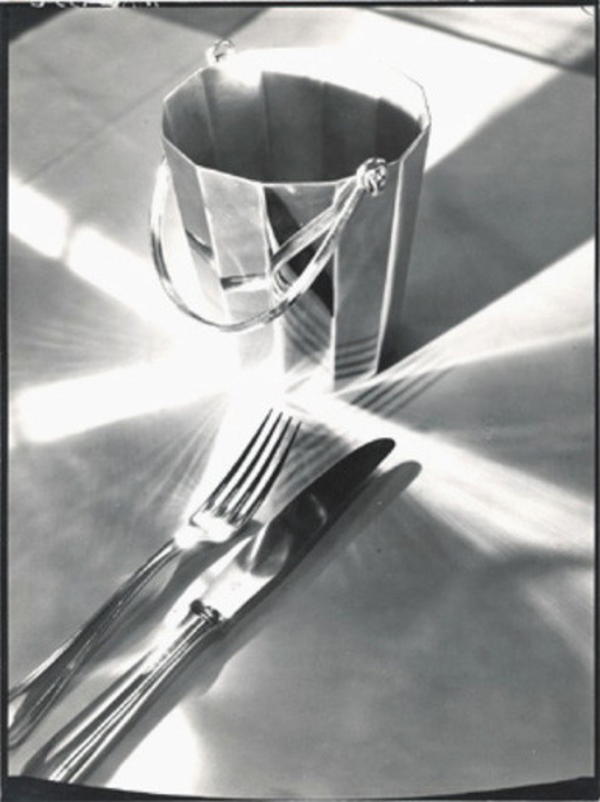
Through this period Tabard became closely associated with Man Ray and René Magritte, and his own work increasingly reflected Surrealist concerns, becoming known for its inventive use of solarization, superimposition, and photomontage. In the late 1920s he also taught photography to Roger Parry and became acquainted with André Kertész; in 1929 his work was included in the landmark Film und Foto exhibition. In 1951 the curator Francis Quirk exhibited his photographs alongside those of Ansel Adams at Lehigh University.
Tabard's work remains a touchstone of interwar experimental photography and is represented in major public collections, including the Centre Pompidou and the Metropolitan Museum of Art.
Exhibitions
Group
- 2018
Neues Sehen — Galerie Julian Sander, Cologne
- 1929
Film und Foto — Deutscher Werkbund, Stuttgart
Links
Biographical information based on galeriejuliansander.de and public sources.
Collections
Centre Pompidou, Paris · Metropolitan Museum of Art, New York