
About
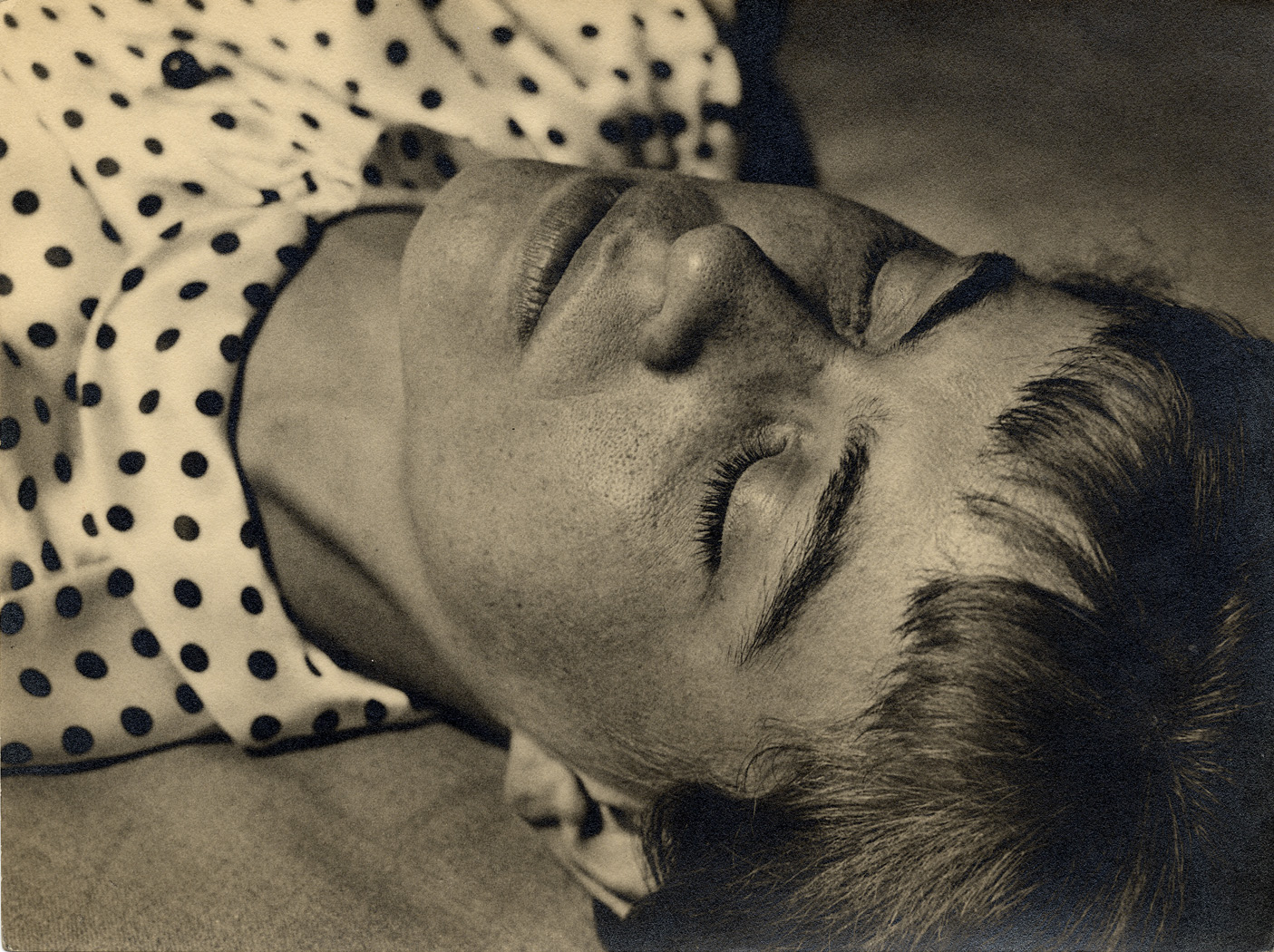
Elfriede Stegemeyer (1908–1988) was a German painter, photographer and cinematic artist whose brief but intense engagement with the medium in the early 1930s places her among the more radical experimenters of the New Vision. Born in Berlin, she studied art there and later in Cologne, where in 1932 she joined the artists’ circle known as the Kölner Progressive, alongside Heinrich Hoerle, Franz Wilhelm Seiwert and Raoul Hausmann.
Within this milieu Stegemeyer pushed photography beyond documentary description, producing photograms, photomontages and still lifes that treated the camera image as raw material for construction rather than record. Her compositions from the mid-1930s — cropped, doubled and often shot from unexpected angles — share the formal daring associated with Bauhaus-adjacent photography of the period, while retaining a distinct, intimate sensibility toward everyday objects and domestic interiors.
Much of Stegemeyer’s early archive was destroyed in Berlin during the Second World War, a loss that for decades obscured her contribution to the period. She later resumed work under the pseudonym elde steeg, continuing to make images until her death in Innsbruck in 1988.
Her surviving photographs from the 1930s have since been reassessed through gallery and fair presentations, restoring her to the history of German avant-garde photography as a singular voice among the Kölner Progressive circle.
Exhibitions
Solo
- 2024
Elfriede Stegemeyer/elde steeg. Photographs 1932–1938 from the Gerd Sander Collection — Galerie Julian Sander, Cologne
- 2019
Elfriede Stegemeyer – Schule des Sehens — Galerie Julian Sander, Cologne
Group
- 2025
AIPAD — New York
- 2025
Paris Photo — Paris
- 2023
Paris Photo — Paris
- 2018
Neues Sehen — Galerie Julian Sander, Cologne
- 2018
Art Cologne — Cologne
- 2017
Paris Photo — Paris
Links
Biographical information based on galeriejuliansander.de and public sources.
Collections
Gerd Sander Collection